Mga robot na pwedeng gawinRobots you can actually build
Libre lahat ng ito. Nakasulat kung ano ang pwede at hindi pwede. The 150 g combat robots the club prints. Every one was opened and read before it went on this list, so anything here is cleared to build. Found something else you want to make? Bring it and we will look at it together.
Mga robotThe robots
Labintatlong robot, labintatlong paraan ng paglaban. Thirteen builds and, between them, nearly every weapon there is: a plow, wedgelets, a wedge, flippers, a lifter, a grabber, a crusher, a pusher-hammer, a beater bar, a full bar, a toothed disc, and spinners that turn flat or upright. Pick one.
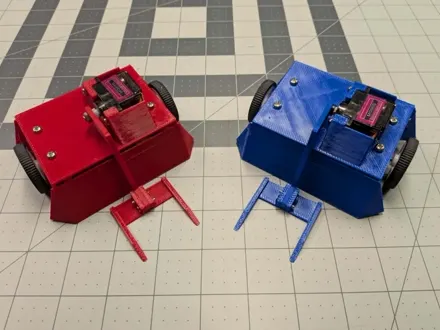
Adelaide Robot Combat — lifter
Adelaide Robot Combat · MakerWorld
A lifter kit — gets underneath and picks the other robot up.
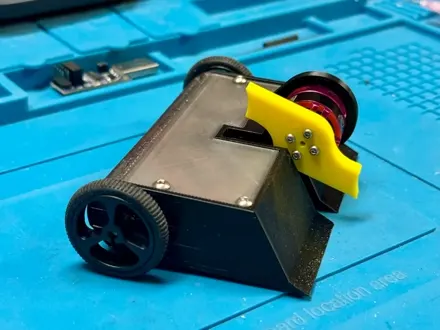
Vertical Spinner
TheBlackfish · MakerWorld
The companion to the Beater Bar from the same designer — same body, a vertical spinning weapon instead of a horizontal bar.
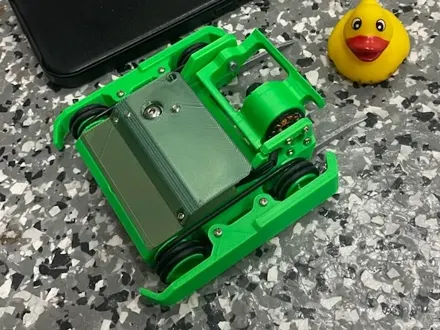
150g Combat Robot
MakerWorld
A plain 150 g build with no gimmick.
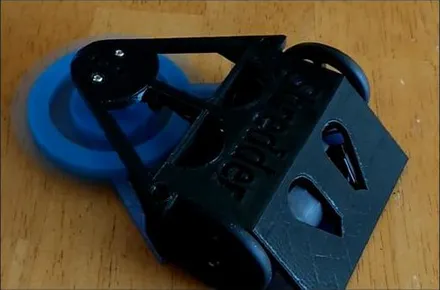
Shredder
drcameron · Thingiverse
Two weapons on one body — a toothed disc and a bar — plus an internal firewall protecting the electronics.
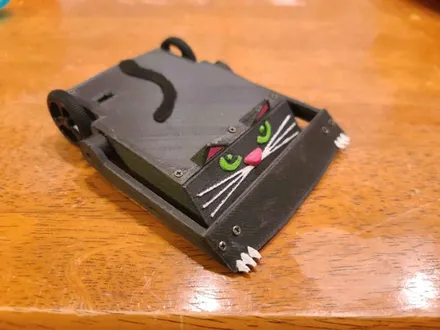
N20 Fairy Flipper
JairEmia · Thingiverse
Rotary flipper on 2× N20s — the arms go all the way round while the button is held. Parts list and build notes come with the download. And it is a cat.
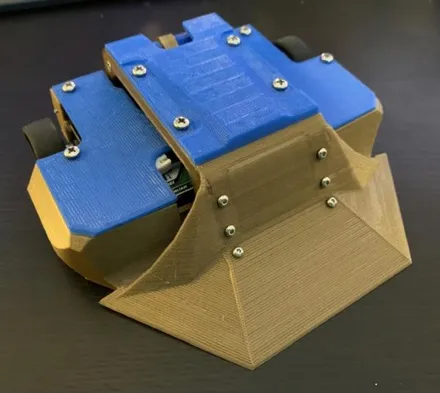
Big Flip
SiegelRacing · Thingiverse
A servo flipper with a stretched chassis, and 4-inch-cube legal.
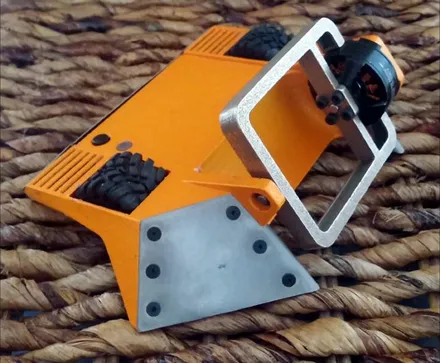
Blockhead
earthwormjim · Thingiverse
Chassis and weapon together, with a wide front wedge and a lifting arm. There is a test video on the design page.
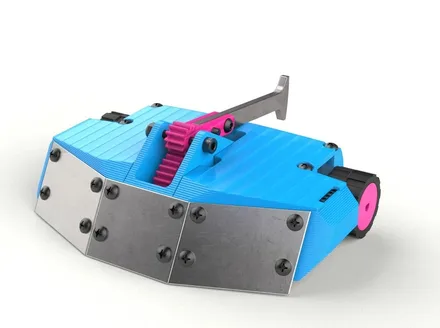
Hammer Battlebot
Tom_Dreyfus, from emancarrillo's original · Thingiverse
Dalawang sandata sa isang robot. Really two weapons in one: a full-width plow to get under the other robot and shove it, plus a gear-driven hammer that swings over the top. The only thing here that strikes downward instead of spinning — and the only one that can push and hit.
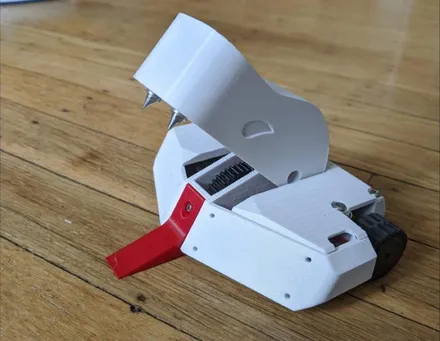
Crusher
emancarrillo · Thingiverse · the same designer as the hammer bot
A hinged, spiked jaw that comes down over the other robot, with a wedge to get under it first. Nothing else here grips — everything else spins, flips or shoves.
He is also honest about it: "more of a control bot as it doesn't really have the power to crush." That is the right expectation to set with a child — it wins by holding and steering the other robot, not by destroying it. Needs no extra tools, but he warns that prepping the gears and setting the servo limits is fiddly.
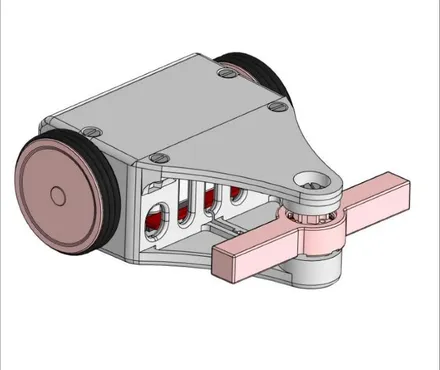
BatBotSpin
Ruffson · Thingiverse
A full horizontal bar on a front bearing mount, sweeping flat and level — the small cousin of the machines that take the side off an opponent. 2× N20 500 rpm for drive, a brushless 1504 for the bar.
⚠️ Specs its N20s at 12 V; our parts list is 6 V. Check which before ordering. Parts links go to Ozon (Russian), so source equivalents locally.
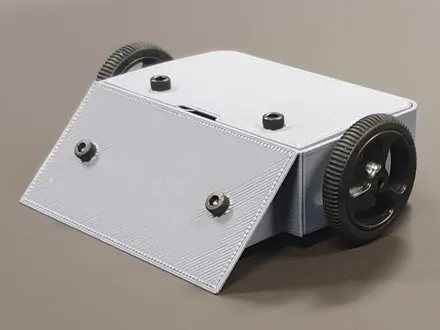
CRNZ Antweight Modular Kit
Paul Mumby (Orb0) · Combat Robotics New Zealand
A whole kit, not one bot: base 2WD pushbot with plow, wedgelets, a 4WD expansion, vertical spinner, horizontal spinner, hugger, grabber/lifter — all on a shared dovetail mount you can design your own module for. Ships an A1 mini print profile and a published build tutorial.
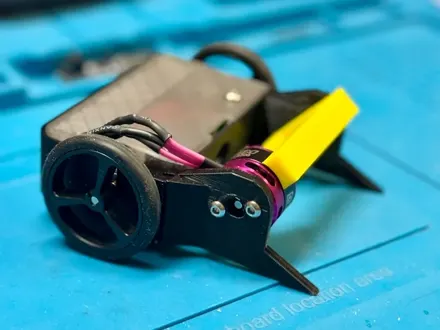
Beater Bar Battlebot
TheBlackfish · MakerWorld
A spinning beater bar on a CRNZ-derived body, with mounts already cut for N20/N10 gearmotors — the same motors in our parts list.
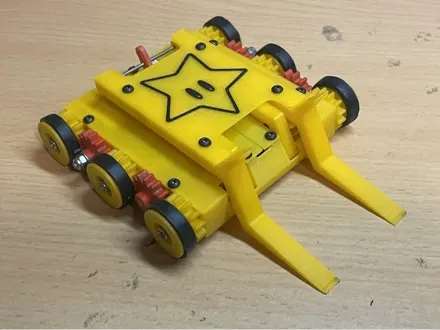
6-wheel servo flipper
MakerWorld
Low, stable, six wheels, and a servo flipper that gets its forks under anything. 2× N20 6V 500 rpm — our motors. Over 50 fights, with a long written guide.
Hindi robot, pero gawin ninyoNot robots — but build these anyway
Ang arena, ang sukatan, at ang kontrol. The arena the fight happens in, the gauge that decides whether a robot is legal, the controller that drives it, and spare wheels. None of them is a robot; all of them matter as much as the robots do.
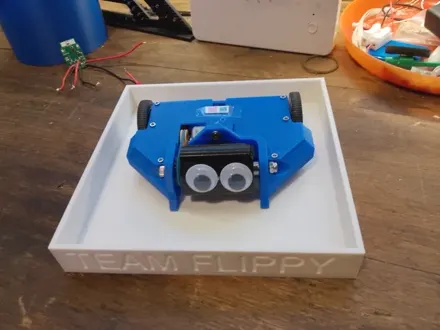
150 × 150 size gauge
MakerWorld
Hindi ito robot — sukatan. Not a robot. A frame your bot must fit through to be legal.
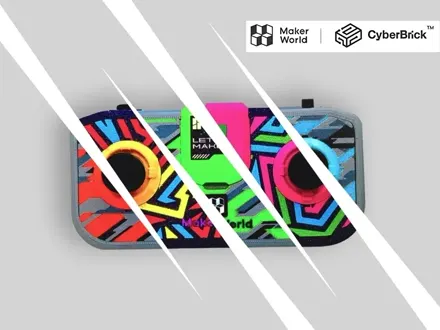
Customizable Remote
MakerWorld · 176 reviews · joystick models sold separately (flat / round)
Isang kontrol na kayo ang gumawa — at may mukha ninyo sa harap. A printed transmitter the kids build themselves, with their own picture or name on the face. It is the only thing on this page that is not a robot, and it may be the most useful.
It makes Lesson 7 real. Right now
huling narinig — "last heard" —
is a number on a screen. With a controller the kids built, talking to the bot over
ESP-NOW, that variable is the time since the last radio packet. Switch the
controller off, watch the number climb, watch the weapon stop.It also teaches inputs, which no module covers yet — a joystick is two potentiometers feeding an ADC, which is Lessons 2 and 4 paying off on something real. And it is cheaper: a second ESP32 is ₱250–400 against ₱800–1,500 for a gamepad. ESP-NOW reaches 100 m+, against Bluetooth's ~10 m.
⚠ The cost, honestly: twenty controllers is twenty more builds and one firmware bug takes out every bot at once — and twenty ESP-NOW transmitters in one room need their peer addresses and channels managed, or a bot answers the wrong child. Solve that before an event, not at one.
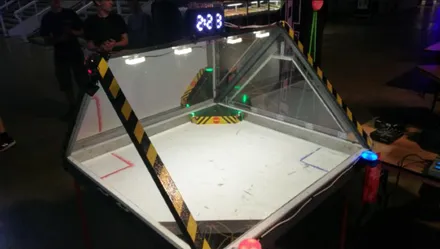
Ang arena · The battle box
JEQuad · Thingiverse · built for 150 g AND 450 g robots
Dito nagaganap ang laban — at dito nananatiling ligtas ang lahat. Angled polycarbonate walls, a lit frame and a match timer. This is where a fight happens and, more to the point, where the pieces stay when something lets go.
Real numbers, which is what makes it useful: 5 mm polycarbonate walls · audience side panels 1276 × 943 mm, two of them · triangles cut corner-to-corner from one 937 × 937 mm sheet with a jigsaw.
⚠️ The designer says plainly it is "for reference, not as full plans" — treat the dimensions as a starting point, not a cut list. Note also that our own notes specify 4.5 mm polycarbonate, not 5 mm; settle that before anyone buys a sheet.
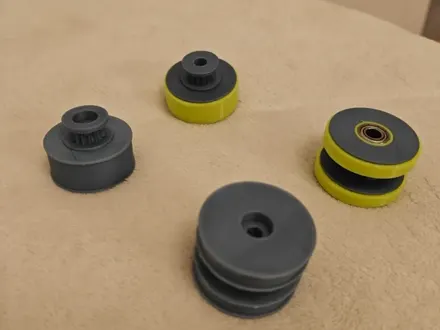
Mga gulong · Wheels
MakerWorld
Printable wheels sized for antweight bots.